Strengthening the American Shield: Strategic Partnerships as the New Front Line of Global Diplomacy

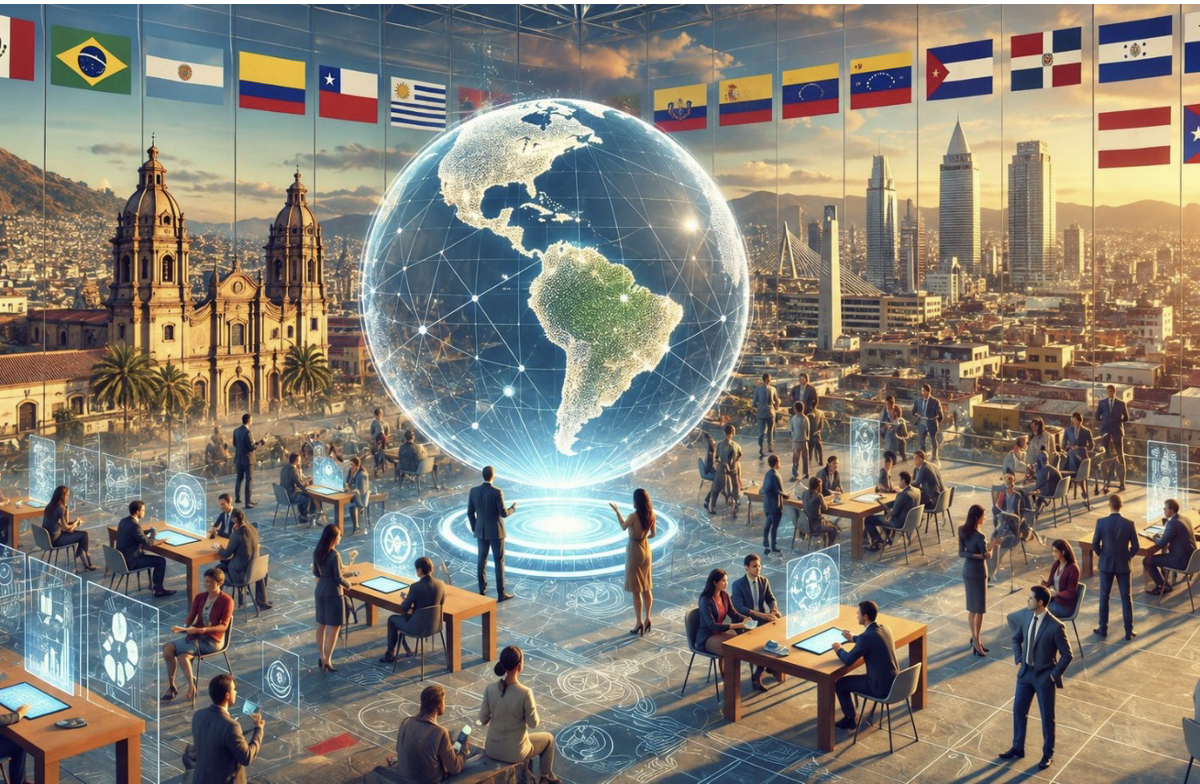
Illustration of professionals collaborating in a modern, technology-enabled environment around a large digital globe displaying the Americas, with regional flags and city skylines in the background

Strengthening the American Shield: Strategic Partnerships as the New Front Line of Global Diplomacy

By John Clarke, Senior Advisor, Global Strategy & Programs, Bizzell US | June 24, 2026

In my twenty years as a U.S. diplomat and geopolitical security advisor for the Fortune 500 and global elite, I learned that influence is a currency best spent through presence and partnership. Whether navigating the complexities of the Colombian Civil War or managing high-stakes evacuations from Lebanon and Ukraine, I found that the ability to speak local languages was only half the battle; the other half was understanding culture, what incentivized and motivated leaders and institutions for self-improvement, what influenced society, and how this related to good and bad actors. Today, we are witnessing a collapse of the traditional “government-only” model of foreign influence. From the kinetic volatility involving Iran to the predatory expansionism of China and Russia, and the global power competition to secure natural resources to expand technological expansion and productivity; American resilience is no longer a solo act. It is the result of a “force multiplier” effect where public policy and private enterprise are seamlessly integrated to secure our national interests and foes use their own instruments of power revolving around technology, supply chains, access to critical minerals, and private enterprise to advance their sovereign, conduct gray zone warfare, and engage in global power competitions

The global landscape is currently marred by systemic “trust gaps” and “infrastructure gaps” that represent a standing invitation for adversarial influence. When the United States fails to occupy these spaces with agility, our competitors fill the vacuum with models of extractive gain that prioritize short-term leverage over long-term stability. This instability in the Western Hemisphere—manifested through energy insecurity, lack of preparedness for natural disasters, human smuggling, illicit and counterfeit goods and narcotics trafficking, as well as food shortages, and youth unemployment—does not stop at the border. It ripples through the hemisphere, including the entire United States affecting our domestic interests, impacting everything from the integrity of our immigration system to the public health, public safety, community cohesiveness challenges, and increased demands for housing, schooling, and employment. Moreover, risks to supply chains and access to critical minerals which can lead to increased costs for U.S. companies and U.S. consumers.

These gaps require more than just diplomatic cables; they require rapid innovation and operational efficiency that only the private sector can provide. However, stakeholders and policymakers have the role of building the mechanisms and architecture, dispersing the seed capital, and creating the incentives improve security, resilience, and economic security for the US and the Americas region. My transition from the Department of State to strategic consulting was an expansion of my toolkit, having managed tactical operations for global milestones like the NFL Super Bowl and Davos, and led security professionals providing predictive analysis for the Fortune 500. Most recently, serving as a lead security and crisis advisor for a $600 million USAID portfolio taught me that the private sector’s ability to scale solutions is our most underutilized diplomatic asset. Moreover, I learned that security is the baseline for fomenting economic opportunity, and sustainable influence is built through investment in people and increases the resilience of the communities where we operate.

Bizzell US operates where traditional bureaucracy often reaches its limits. In resource-constrained and conflict-affected environments, we serve as a mission-driven force multiplier to protect American interests and local lives simultaneously. In the Democratic Republic of the Congo (DRC), Bizzell supported the CDC’s Ebola and COVID-19 response in the volatile North Kivu and Ituri provinces. Beyond providing surge technical capacity, we took a lead role in the Field Epidemiology Training Program (FETP). By training a “Corps of Disease Detectives,” we didn’t just respond to a crisis; we built a sustainable, locally anchored health security system. Our ability to reach “inaccessible areas” and provide real-time epidemiological data allowed the U.S. government to make actionable policy decisions in environments too high-risk for direct federal deployment.

In Northern Haiti, I advise a 65-acre school and farm that provides education and food for 250 children while employing 40 residents. This project serves as a microcosm for the partnership model: it replaces dependency with economic opportunity. By creating a scalable model of agricultural and educational resilience, we demonstrate to the region that the American partnership is the “partner of choice”. This stands in stark contrast to the “debt-trap diplomacy” of adversaries who invest in infrastructure not as a philanthropic endeavor, but as a strategic maneuver to secure long-term influence.

The U.S. private sector offers a superior alternative through the Four Pillars of American Competitive Advantage:

  • Innovation as a Strategic Asset: Leveraging world-class entrepreneurship in AI and biotech to solve local challenges before they become global crises.
  • Scalability through Interoperability: Utilizing private-sector networks to expand local successes rapidly across entire regions.
  • Sustainability over Extraction: Focusing on long-term human development as the primary driver of regional stability.
  • Democratic Transparency as a Moat: Building trust through ethical data practices and transparency to create a “trust advantage” that competitors cannot replicate.

The future of American leadership will be forged in the field, where industry leaders, non-profits, and government agencies collaborate and align their vision to meet the speed of modern threats. This is increasingly relevant to the Americas region when countries like Brazil are estimated to have nearly 25% of global rare earth mineral and millions of U.S. citizens have family ties throughout the region. The US remains a beacon on the hill, where permanent residents and citizens send billions in remittances to countries throughout the region. In short, the fate of U.S. security, global health, economic prowess, governance, and stability and the fuel and resources which will allow us to expand is inextricably linked to the economy, capital, health, and physical security of the entire hemisphere.

As the largest economy and country by population in the Americas, the US has the opportunity and capability to lead, but as geopolitics shift time is of the essence. As the legendary former Brazilian soccer captain Pelé once said, “No individual can win a game by himself”. In the arena of global diplomacy, the era of the lone-wolf superpower is over. Architecting a unified national and regional front is no longer a strategic preference, it is essential for our national survival. When we align our public priorities with our private-sector capabilities, we do more than just protect the American Shield; we ensure a stable, prosperous, and secure US and Americas region for generations to come.

Artificial intelligence is everywhere these days — but especially for the fastest-growing companies in the region.

Photo of a robot with multiple arms in front of a blue sky.
Credit: Washington Business Journal

Artificial intelligence is everywhere these days — but especially for the fastest-growing companies in the region.

By Carolyn M. Proctor – Data and Projects Editor, Washington Business Journal | Oct 23, 2025

There’s no avoiding artificial intelligence. And we’re not talking about your Google search results.

At least a third of the companies on our Fastest Growing Companies List this year describe their direct offerings as including AI. This year it was also named the fastest-growing business segment at nearly a third of the companies in a poll, more than any other response.

Greater Washington is home to the companies building and powering AI, providing AI services, or employing AI behind the scenes. It is, indeed, everywhere.

“Our AI, machine-learning and predictive analytics business sectors are experiencing exponential growth,” said Sid Chowdhary, CEO of Credence Management Solutions LLC, which grew revenue an average of 36% over the past three years.

When I reached out for commentary about how AI is involved — or not involved — in their work, all 16 companies that responded unanimously described AI as an integral and growing factor, with half offering AI products or services directly. And they all also plan to increase their use of AI in the next year. Take a look at the many ways AI is shifting the ranks of the region’s fastest growing companies.

Powering AI

Some of our Fastest Growing Companies are actually building the data centers that power the tech.

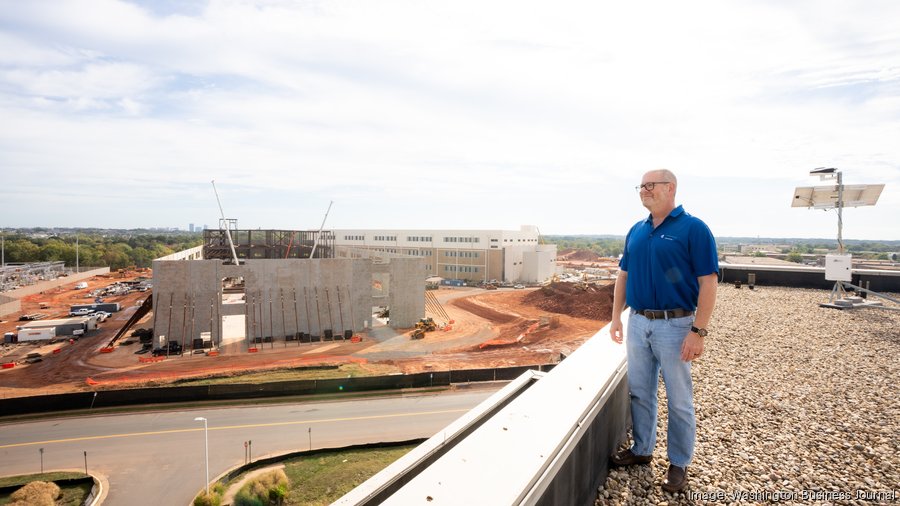
Our No. 1 company, Worldwide Mission Critical, is a perfect example. Worldwide is in the business of developing data centers and has grown its revenue an average of 247.27% over the past three years. So, how much of that growth can be attributed to the demand for AI?

“Oh, it’s a huge part of it,” co-founder Brad Gray said from its Herndon headquarters. “Where it stops, I don’t know. But for right now, as the companies invest to be the first — the hyper-scale companies, the Googles and Microsofts and Oracles and whatnot — it’s just massive investments to be first, and we’re doing our best to serve them.”

Principal of Worldwide Mission Critical, Brad Gray, overlooks one of his major data center projects from his office in Herndon.
Abdullah Konte/WBJ

Falls Church-based Hitt Contracting Inc. isn’t just a massive general contractor, but one that specializes in mission-critical projects — structures that absolutely cannot fail, e.g., data centers. And that sector is driving Hitt’s exponential growth. Mission-critical project revenue grew at Hitt by 330% between 2019 and 2023, from $824 million to $3.6 billion.

Hitt is not the only construction company on our List, but it is one of only two multibillion-dollar companies represented, and it has grown to become the largest locally based general contractor, with total revenue of over $8.6 billion in 2024.

Selling AI

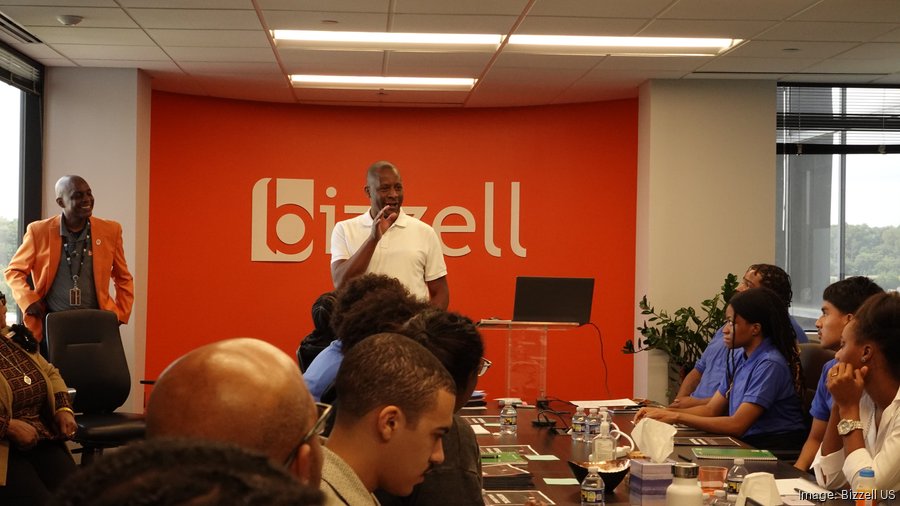
Anton Bizzell, founder and CEO of Bizzell US, said his company doesn’t just use AI — it’s teaching others how to use it.

The New Carrollton-based consultant pairs AI tools with instructor-led training programs in its Bizzell AI Learning Lab, a monthly program teaching participants AI-related job skills. So far, Bizzell said, participation has included pretty diverse industries, such as HVAC and electrical contractors, security and protective services, transportation service workers, and even some high school and community college students.

The Bizzell AI Learning Lab is a monthly program launched by Bizzell US that teaches participants practical AI skills.
Bizzell US

While AI tools are key to Bizzell’s work, he said the company’s “focus on guardrails and continuous learning delivers productivity gains without eroding craftsmanship, professional judgment, or jobs.” Bizzell has grown an average of more than 30% since 2022, from just under $50 million to more than $84 million in revenue.

Another big grower on our List, FedTec LLC, offers products and services directly related to AI. The federal contractor grew an average of more than 111% in the past three years to $122.5 million in revenue.

“We integrate AI and machine learning into every solution we develop for our defense and civilian partners,” said Vice President Jignesh Gandhi, who oversees innovation and engineering. The company sells an AI-powered cybersecurity system and also develops AI tools for automating tasks like data extraction and redaction for its government clients, among other things.

“FedTec has significant plans to scale our use of AI in the coming year,” Gandhi said. That includes expanding its cyber operations center, BlueDome, to boost its abilities to predict and monitor online threats; it’s also developing new AI pilot programs.

Using AI

Finally, if you’re not making or selling AI, there’s a good chance you’re still using it — like many of the companies on our List do to boost efficiency and their bottom lines.

Take Mitchell Cho, CEO of FedWriters Inc. He said his company increasingly uses AI to enhance its data analysis, technical writing, and editing capabilities.

“We apply it selectively and responsibly. Our stance is that AI should augment, not replace, human expertise,” Cho said. FedWriters has grown its revenue an average of 44.65% in the past three years.

Mitchell Cho, CEO of FedWriters Inc.
FedWriters Inc.

Vienna-based staffing and consulting firm Take2 Consulting LLC, which grew an average of 40.6% in three years, uses AI to help it find and match talent for clients. It uses an AI assistant and virtual screener as part of its applicant tracking system for recruiting.

Even The Centers for Advanced Orthopaedics is in on it. The physicians behind the only medical practice on our List — which grew an average of 72.62% in the past three years to $800 million in revenue — also founded MedVanta, headquartered in Bethesda, a medical technology company for musculoskeletal physicians. Its VantaMotion platform uses AI screening to identify risks, assess health and personalize care programs. Other AI-embedded platforms are used for scheduling, or to triage cases for urgent care with the help of AI.

At Piedmont Global, Vice President of Product Saba Dovlatabadi said the language and translation solutions company uses AI to speed up some repetitive or data-heavy tasks, like large-scale quality checks or generating drafts. Piedmont grew from about $35 million in revenue in 2022 to over $54 million in 2024.

And the plan is to integrate even more AI going forward.

“The coming year is about scaling: embedding AI more deeply into client reporting, predictive analytics, and personalized language access strategies,” Dovlatabadi said. But he also clarified that the company is “selective” about how it uses AI.

“The principle is clear: automation should never replace accountability,” he said.

About Bizzell US

Bizzell US is a strategy, consulting, and technology firm dedicated to building healthy, secure, connected, and sustainable communities across the nation and around the world. Guided by our mission to produce excellent work that exceeds client expectations, we deliver efficient, innovative, and fiscally responsible solutions while upholding the highest standards of personal and professional integrity. Our team partners with public and private sector clients to advance impactful initiatives in health, workforce development, education, technology, and economic empowerment. For more information, visit bizzellus.com.

Media Contact: Shelly L. Burgess

(301) 747-7883media@bizzellus.com

Bizzell US Makes Third Appearance on the 2022 Washington Business Journal List

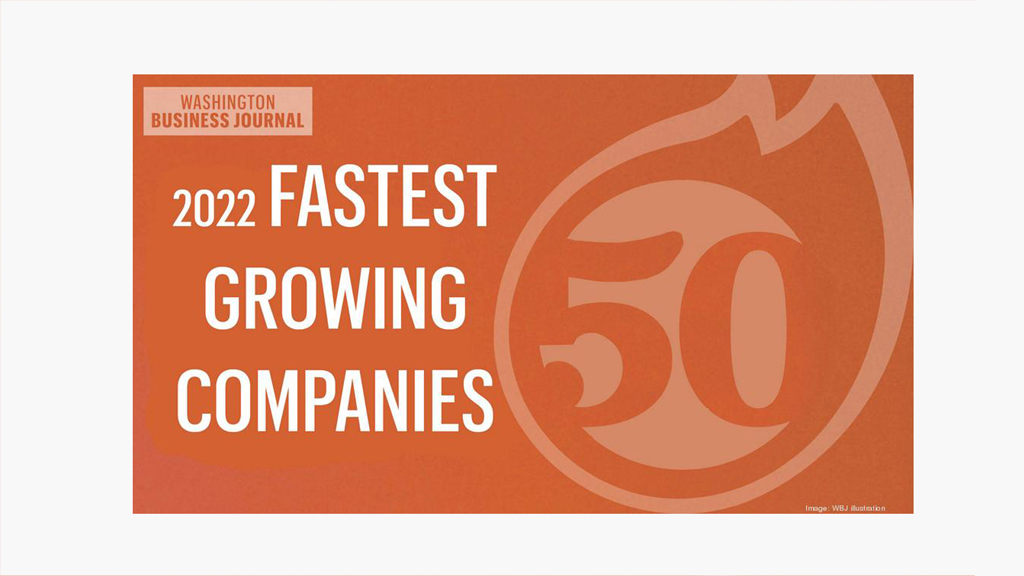
Bizzell US Makes Third Appearance on the 2022 Washington Business Journal List of 50 Fastest Growing Greater Washington Companies

Bizzell US, a Maryland based strategy, consulting, technology firm has been named to the 2022 Washington Business Journal’s (WBJ’s) list of the 50 fastest-growing companies in the greater Washington, DC area. This year’s inclusion on the 2022 WBJ Fast 50 list marks the third occasion that Bizzell US has been recognized for their phenomenal growth.

Bizzell US ranked #42 on the WBJ Fast 50 list with a three-year revenue growth of 53.76 percent. Bizzell US is among the seven (7) Maryland-based companies and one of 13 government contractors named to the 2022 list. This recognition signifies consistent growth since the company’s inception in 2010.

Each year, the WBJ recognizes the 50 fastest growing companies in the Washington, DC area, based on average three-year revenue-growth percentage. Additionally, companies must be headquartered in the DC area and must have had 2019 revenue exceeding $2 million and 2021 revenue of more than $10 million to qualify for this award.

The full rankings were officially announced at the Ritz-Carlton in Tysons Corner, Virginia on October 20, 2022, and the full list appears in the October 21, 2022 edition of the WBJ.

View the full list: Greater Washington’s 50 fastest-growing companies in 2022, ranked

“We are honored to be recognized by the Washington Business Journal as one of the DC area’s fastest-growing companies for the third year,” said Dr. Anton C. Bizzell, Chairman and CEO of Bizzell US and Bizzell Global Ventures. “This list contains an elite group of firms, and we are elated to be part of this exclusive group. Bizzell’s growth and success is a testament to not only the staff talent at Bizzell, but also to the commitment of our clients as we act on their behalf to accelerate their missions.”

About Bizzell US

Established in 2010, Bizzell US is U.S. Small Business Administration (SBA) HUBZone certified strategy, consulting, and technology firm with a mission to improve lives and accelerate change. Bizzell US develops innovative solutions to some of the most critical issues of our time such as health care services equity, global health, workforce innovation and other urgent needs facing the world. Under the leadership and vision of founder, Anton C. Bizzell, MD, the company has grown into a thriving firm headquartered in New Carrollton, Maryland with staff and offices in various regions around the country including California, Colorado, Oklahoma, and Georgia, and globally in Africa, Asia, and Central America. Learn more about how we develop data-driven, research-informed, innovative solutions to complex-real-world challenges: www.BizzellUS.com.

Bizzell Global Ventures Contact
Carlos Gomez, Market Impact Specialist
Cgomez@bizzellglobal.com | 301-459-0100 x286

rocket launching off

The Bizzell Group Announces Name Change and Launches New Website

The Bizzell Group Announces Name Change and Launches New Website

The Bizzell Group, LLC, a leading management strategy, consulting, and technology firm, focused on designing innovative solutions to help build healthy, secure, and sustainable communities, is proud to announce a corporate name change to Bizzell US (Bizzell), and the launch of its new newly redesigned website at www.BizzellUS.com.

The name was changed to represent the company’s revised vision and growth more clearly, and to provide a more independent front for Bizzell’s continental operations. Bizzell US (the new name) is effective immediately and kicks off Bizzell’s 12th year in business. The Bizzell Group will continue doing business as Bizzell US.

The new site features a streamlined modern design, improved functionality, with seamless navigation to access information throughout the site. The goal was to make the site more dynamic and easier to access valuable information about the company and its technical solutions.

“We are thrilled to debut our new company name and website to our clients, partners, stakeholders, the public, and interested parties who are looking to understand the breadth of the company’s products and services,” said Dr. Anton Bizzell, Chief Executive Officer, and Chairman for Bizzell US. “The corporate name change, and website redesign truly ties together Bizzell’s service offerings and allows each visitor to access our robust capabilities and experience our impact areas.”

The new website will be updated on a regular basis with news of contracts awards and projects, access to capability statements, our latest insights from the field, essential client information, open positions, and corporate milestones. Visitors are encouraged to explore the website and contact us if you have any questions about our services at www.BizzellUS.com.

About Bizzell US

Established in 2010, Bizzell US, is U.S. Small Business Administration (SBA) HUBZone certified strategy, consulting, and technology firm with a mission to improve lives and accelerate change. Bizzell US develops innovative solutions to some of the most critical issues of our time such as health care services equity, global health, workforce innovation and other urgent needs facing the world. Under the leadership and vision of founder, Anton C. Bizzell, MD, the company has grown into a thriving firm headquartered in New Carrollton, Maryland with staff and offices in various regions around the country including California, Colorado, Oklahoma, and Georgia, and globally in Africa, Asia, and Central America. Learn more about how we develop data-driven, research-informed, innovative solutions to complex-real-world challenges: www.BizzellUS.com.

Bizzell US Contact
Carlos Gomez, Market Impact Specialist
Market_Impact@BizzellUS.com | 301-459-0100 x286

1 2 3 5